
Introduction
As technology advances at an unprecedented pace, the robotics industry is entering a period of explosive growth. Breakthroughs in artificial intelligence (AI), the Internet of Things (IoT), and precision manufacturing are fundamentally reshaping the global robotics landscape. Within this vast and intricate value chain, one material—copper—plays an irreplaceable role. This article provides an in-depth analysis of copper consumption across different segments of the robotics industry chain over the next five years, exploring the underlying trends and their far-reaching implications.
I. Copper Consumption Across the Robotics Industry Chain
Upstream: Core Component Manufacturing
Electric motors and servo systems lie at the heart of robotic technology. With its superior electrical conductivity, corrosion resistance, and ductility, copper is indispensable.
· Each industrial robot typically requires 5–8 kg of copper for its servo motors.
· In collaborative robots (cobots), where lightweight design is critical, denser copper windings push consumption higher—around 10–12 kg per unit.
· Sensors and circuit boards also rely heavily on copper: the sensor system alone uses 1–2 kg, while PCB copper foil accounts for 8–10% of the board’s total weight, with each control PCB consuming 0.5–1 kg of copper.
· Precision components such as reducers and bearings often contain copper alloys—each RV reducer uses approximately 0.3–0.5 kg.
In total, copper consumption per unit averages 6–12 kg for industrial robots and 12–15 kg for collaborative robots.
Midstream: Robot Body Manufacturing
This stage represents the core assembly of the robot, where copper is essential for wiring, connectors, and structural components:
· Wiring harnesses require 3–5 kg of high-purity copper per unit.
· High-speed data connectors (e.g., EtherCAT interfaces) consume an additional 0.2–0.3 kg.
· Lightweight joints and mechanical structures use 1–2 kg of copper alloys.
· Thermal management systems, including radiators and heat pipes, add further copper demand.
Combined, the midstream copper consumption typically reaches 4.7–8.3 kg per robot.
Downstream: System Integration and Application
In the integration and deployment phase, copper demand remains significant:
· Charging modules and cables for AGV/AMR mobile robots use 2–3 kg of copper.
· Battery connectors for energy storage add another 1–1.5 kg.
· Smart workstation power systems consume 5–10 kg, depending on functionality.
Maintenance and upgrades of robotic systems will continue to drive copper demand even after deployment.
Overall, total copper usage per unit stands at 8–14.5 kg for industrial and collaborative robots combined.
II. Forecast of Copper Demand Along the Robotics Value Chain (2025–2030)
Global copper demand from the robotics industry is projected to grow sharply in the coming years. By 2025, total demand is expected to reach 30,000 tonnes, rising to 80,000 tonnes by 2030, representing a compound annual growth rate (CAGR) of 21.67%.
Although this increase is modest compared with the electric vehicle sector, the robotics industry remains one of the fastest-growing sources of incremental copper demand worldwide.
III. Technological Trends Shaping Copper Demand
1. Humanoid Robots
The rise of humanoid robots—such as Tesla’s Optimus and Xiaomi’s CyberOne—is expected to be a major driver of copper consumption. Each humanoid robot, with 20–30 joints, is estimated to require 8–15 kg of copper.
2. Motor Upgrades
The shift toward high-frequency, high-precision motors, including maglev and coreless designs, will significantly increase copper density in motor windings by 30–50%. This evolution could add 3–5 tonnes of copper demand per year by 2030.
3. Material Competition: Lightweighting vs. Conductivity
Although aluminum and carbon fiber composites are being adopted for weight reduction, their lower electrical conductivity prevents them from replacing copper in critical precision applications. Copper will therefore retain its core position in high-performance robotic systems.
IV. Regional Market and Supply Chain Risk Analysis
China
As the world’s largest robot producer, China is expected to drive nearly 45–50% of global copper demand from the robotics industry over the next five years. According to the country’s 14th Five-Year Plan for Robotics Industry Development, national robot density is projected to double by 2025.
However, with a domestic copper self-sufficiency rate below 30%, China will remain heavily dependent on imports—leaving its copper supply chain exposed to geopolitical and market uncertainties.
Europe and the United States
Advanced manufacturing upgrades, supported by the EU’s “Digital Compass” initiative, are stimulating robotic deployment. For example, a KUKA KR FORTEC model consumes 20% more copper than standard models. Nonetheless, rising environmental regulations—especially carbon border taxes—are likely to push up copper processing costs across Europe.
Japan
Japan continues to dominate in precision robotics and motion control, led by companies such as FANUC and Yaskawa Electric. With growing demand for high-end reducers and actuators, the premium on copper alloys in these applications is steadily increasing.
V. Investment and Industry Recommendations
Investors should focus on high value-added segments within the robotics copper value chain:
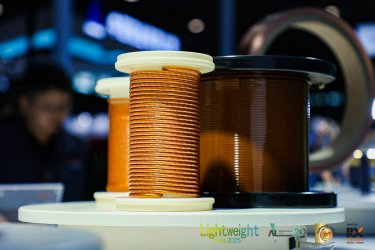
· Enameled wire and magnet wire producers for robotic motors will see strong demand growth.
· Copper alloy manufacturers, such as Chinalco Luoyang Copper (Luoyang Copper Processing Co., Ltd.), have substantial opportunities in domestic substitution for high-end reducers and bearing applications.
At the same time, copper price volatility remains a key risk factor. Should copper prices exceed US$12,000 per tonne, total robot manufacturing costs could rise by 8–12%, underscoring the need for effective hedging and procurement strategies.
VI. Conclusion
Over the next five years, the global robotics industry will become a major new engine of copper demand growth. While total consumption may remain smaller than that of the power grid or electric vehicle sectors, the growth rate of copper usage in robotics is among the fastest worldwide.
The surge will be primarily driven by humanoid robots, high-precision motor upgrades, and intelligent manufacturing advancements, supported by favorable industrial policies in key regions.
In the short term, copper remains irreplaceable in robotic applications. However, as technology evolves and global market uncertainties persist, investors should adopt a strategic and cautious approach—prioritizing reliable partnerships, monitoring policy shifts, and closely tracking global copper supply dynamics.
Source:Sohu