
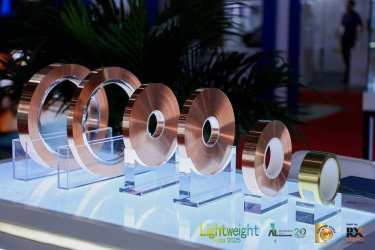
With the overall market sentiment improving, listed copper foil companies in China have generally reported strong year-on-year performance growth in the first three quarters of 2025.
As of October 28, among copper foil producers that have released their Q3 2025 financial results, Tongguan Copper Foil, Defu Technology, and Zhongyi Technology all turned profitable compared with losses in the same period last year. Companies such as Hengtong Co. and Yinglian Co. achieved positive profit growth, while Nord Co. reported a sharp narrowing of losses.
Benefiting from the rapid expansion of industries such as artificial intelligence (AI) and solid-state batteries, China’s copper foil sector is experiencing a notable recovery, reflected in rising demand, higher processing fees, and accelerated technological upgrades.
Demand Picking Up Noticeably
Previously, aggressive capacity expansion in the copper foil industry led to oversupply, fierce competition, and significant declines in processing fees, which squeezed profit margins across the sector. However, with downstream demand strengthening, signs of recovery have become increasingly evident, and processing fees for certain products have started to rebound.
On October 27, Tongguan Copper Foil reported revenue of RMB 4.735 billion for the first three quarters of 2025, up 47.13% year-on-year, with a net profit of RMB 62.72 million—returning to profitability. Defu Technology’s report showed revenue of RMB 8.5 billion, up 59.14% year-on-year, and a net profit of RMB 66.59 million, also reversing losses.
Multiple copper foil companies have stated that their order books are full and production schedules are tight. In mid-September, Tongguan Copper Foil told investors: “Our copper foil orders remain robust, with particularly strong demand for high-frequency, high-speed copper foil. Production and delivery are proceeding in an orderly manner.” Defu Technology also revealed on its investor platform that its operating rate in Q3 remained above 90%, with September shipments hitting a record high.
Bo Wenxi, Vice Chairman of the China Enterprise Capital Alliance, commented to Securities Daily: “This year, overall demand in the copper foil industry has improved significantly, especially driven by emerging sectors such as new energy vehicles, energy storage, 5G communications, and AI servers. The industry is entering a phase of structural recovery and high-end transformation.”
Demand recovery in the copper foil sector is mainly reflected in two key areas: first, AI and 5G are fueling the need for high-end PCB copper foil, as high-frequency and high-speed copper foil sees surging demand in AI servers, 5G base stations, and data centers; second, lithium battery and energy storage applications are driving strong demand for ultra-thin copper foil, with energy storage batteries seeing rapid growth under China’s “dual carbon” goals.
Targeting the High-End Market
At present, HVLP (High-Frequency Very Low Profile) copper foil has become a core material for high-frequency, high-speed signal transmission. In response to the growing downstream demand, Chinese companies are ramping up efforts across technology, capacity expansion, and customer partnerships.
According to Defu Technology, its HVLP Generation 1–3 copper foil products have been successfully adopted by clients, while Gen 4/5 products are progressing smoothly through customer qualification.
Tongguan Copper Foil has also stated that it began developing high-end copper foil products early on, aligning closely with market needs. Its HVLP copper foil has entered mass production and is being exported at scale. The company now operates multiple complete HVLP production lines and has purchased additional surface treatment equipment to expand capacity. By mid-2025, its HVLP production capacity already exceeded that of the full year 2024.
As a key raw material for high-end copper-clad laminates (CCLs), HVLP copper foil carries significant technical barriers, with only a few producers worldwide capable of mass production. As Chinese manufacturers continue to make breakthroughs, the potential for domestic substitution remains substantial.
“Historically, HVLP copper foil faced a tough technical challenge—balancing low surface roughness (to ensure low signal loss) with high peel strength (to ensure strong adhesion to resin substrates),” an industry insider told Securities Daily. “In recent years, the introduction of specialized additives in roughening solutions has provided a viable solution to this contradiction, driving rapid advancements in high-frequency electronic materials and 5G applications. Currently, supply of HVLP Gen 3 and above, as well as carrier copper foil, remains tight globally, with Gen 4 expected to become the mainstream specification for AI servers by 2026.”
Looking ahead, the growth potential of the copper foil industry remains vast. Supportive national policies for sectors such as new energy and AI will continue to ensure long-term demand, while deepening partnerships between domestic copper foil producers and leading battery, PCB, and semiconductor manufacturers will further accelerate the industry’s shift toward high-end development.
Source:Securities Times