
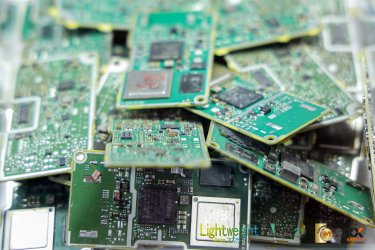
Fueled by the explosive demand for AI computing power, deeper 5G penetration, and accelerated vehicle electrification, the global printed circuit board (PCB) industry is experiencing strong structural growth. In 2025, high-end PCB prices rose by 37.8% year-on-year, while delivery cycles extended to 12–16 weeks. This surge has significantly benefited upstream material suppliers—from base substrates to niche raw materials—all now operating in a high-growth cycle.
This report provides a detailed breakdown of how the PCB boom is reshaping the materials supply chain and creating new opportunities across the entire ecosystem.
PCB Expansion Spurs Material-Sector Upswing
1. Rapid Capacity Expansion and Intensified Capital Investment
Major Chinese PCB manufacturers are accelerating their high-end capacity expansion. Industry leaders such as Dongshan Precision, Shenghong Technology, and Shennan Circuits have all increased capital expenditure sharply. In Q1 2025, Chinese PCB producers’ cash payments for fixed-asset investments grew 42.4% year-on-year.
Companies are focusing on advanced products such as HDI and high-layer-count boards to meet demand from emerging sectors including AI servers and 5G base stations.
With this expansion, the value content of high-end PCBs has risen dramatically. A single AI server now contains about RMB 5,000 worth of PCBs—over four times that of a conventional server. Prices of high-multilayer boards (18 layers and above) have surged 37.8% year-on-year, and value increases by 3–5× for designs exceeding 40 layers.
2. Technological Upgrades Drive Value Growth Across the Chain
PCB technology is rapidly evolving toward higher density and superior electrical performance. The mSAP process enables sub-10 µm line widths, while panel-level packaging enhances interconnect density. NVIDIA’s orthogonal backplane architecture has spurred demand for ultra-low-loss materials.
These advancements not only boost PCB value but also accelerate coordinated growth across manufacturing, materials, and equipment segments.
Downstream demand expansion is amplifying raw material shortages. Global demand for electronic-grade quartz cloth is expected to reach 180,000 tons in 2025, yet supply remains insufficient. Orders for high-end PCB equipment now exceed USD 12 billion, positioning material suppliers as the core growth drivers in the value chain.
Copper-Clad Laminate (CCL): The Cornerstone of PCB Materials
1. Expanding Demand Underpins Growth
As the foundational material in PCB manufacturing, copper-clad laminate accounts for the largest share of material costs, performing essential conductive, insulating, and mechanical support functions. Its performance directly determines signal integrity and device efficiency.
In 2024, China’s apparent consumption of CCL reached 9.08 billion m², up 24.7% year-on-year, with sales volume up 24.0%. The ongoing PCB capacity buildout continues to fuel strong demand.
The AI computing revolution is further driving high-speed CCL consumption. Each AI server uses substantially more CCL than traditional models. The global high-frequency, high-speed CCL market grew to USD 2.63 billion in 2023 and is expected to reach USD 2.8 billion in 2024, up 8%.
2. Clear Shift Toward High-End Materials
High-end CCLs are divided into high-frequency and high-speed types, primarily used in 5G base stations and AI servers. The lower the dielectric constant (Dk) and dissipation factor (Df), the better the signal performance.
In 2025, prices of high-frequency and high-speed substrates rose more than 25% year-on-year, with M9-grade materials priced 30–50% higher than M8 grades.
China’s high-frequency CCL sector now exhibits a well-structured competitive landscape:
· Industry leaders such as Shengyi Technology and Zhongying Science & Technology are driving technological innovation.
· Mid-tier players like Nan Ya New Material and Goldenmax are strengthening their positions in the mid- to high-end segment.
· Emerging firms such as Yaohong Electronics are achieving breakthroughs in specialized applications, jointly advancing the industry’s upgrade path.
Deep Dive: Raw Materials Across the Supply Chain
Raw materials account for roughly 87% of CCL production costs. As PCB demand rises, consumption of copper foil, resins, and glass fiber cloth continues to climb—each segment showing distinct growth highlights.
1. Copper Foil – Core Conductor with Surging Market Scale
Copper foil is the key conductive layer in both CCL and PCB. In 2025, copper prices climbed over 20% year-to-date, with LME copper stabilizing around USD 9,800 / ton, pushing copper foil values higher.
Composite copper foil is entering critical certification and application testing phases. The market size reached RMB 9.28 billion in 2023 and is projected to expand to RMB 29.15 billion by 2025, representing a robust CAGR of 77.2% (2023–2025).
2. Resins – New Materials Driven by High-Frequency, High-Speed Demand
As performance requirements increase, conventional epoxy resins are losing ground to new formulations such as hydrocarbon resins, PPE (polyphenylene ether), and PI (polyimide).
Currently, mainstream high-frequency CCLs use PTFE (polytetrafluoroethylene) and hydrocarbon resin systems. With ongoing AI-server upgrades, demand for advanced resin materials will continue to expand.
3. Glass Fiber Cloth – Key Insulating Reinforcement with Supply Constraints
Electronic-grade glass fiber cloth provides insulation and mechanical strength but faces high technical and capital barriers. In 2025, electronic glass cloth prices rose 12% year-on-year, while leading suppliers such as Nitto Denko announced 20% price hikes.
The rollout of 6G base stations is driving a surge in demand for quartz cloth, where global shortages have become a bottleneck limiting high-end PCB capacity expansion.
4. Other Supporting Materials
· Silica Micro-Powder: Used as a high-performance filler. China’s demand reached 418,000 tons in 2024 and is expected to grow 13.2% to 473,000 tons in 2025.
· Prepreg Sheets: The Chinese prepreg market was valued at RMB 15.19 billion in 2023 and is projected to reach RMB 20.04 billion by 2030 (CAGR 4.0%). Product quality directly affects CCL performance.
· PCB Ink: Valued at RMB 6 billion in 2024 and estimated at RMB 6.8 billion in 2025, up 13.3% year-on-year. High-frequency PCB applications are driving innovation in high-performance ink formulations.
Conclusion: Materials Sector Enters a Golden Growth Cycle
Driven by the high-end and large-scale expansion of the PCB industry, the upstream materials sector is fully benefiting. Copper-clad laminates lead the growth, while copper foil, resins, and glass fiber cloth segments all show robust supply-demand momentum.
The sustained price increase of high-end PCBs in 2025, combined with rising raw-material costs and production bottlenecks, continues to support the strong performance of the materials sector.
Leveraging mature industrial ecosystems and technological capabilities, Chinese manufacturers are steadily expanding their global market share. As breakthroughs in AI, 6G, and autonomous driving accelerate, the PCB material supply chain is entering a broader phase of opportunity and transformation.
Source:SOHU