
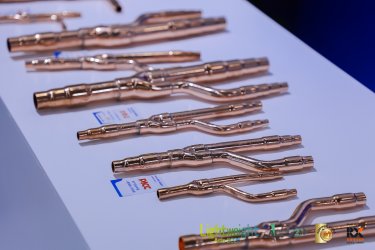
Copper, one of the earliest metals used by mankind, has long maintained a central role in the industrial system due to its excellent electrical conductivity, thermal conductivity, ductility, and corrosion resistance. From ancient bronze ware to modern power transmission, electronic communications, new energy vehicles, and aerospace applications, copper processing products have become essential materials driving technological progress and industrial upgrading.
As the world undergoes a new wave of technological revolution and industrial transformation, the copper processing industry is entering an unprecedented period of opportunity and challenge, driven by technological innovation, green transformation, and shifting demand structures.
I. Current Development of the Copper Processing Industry
(I) Technological Innovation: From Traditional Processes to High-End Manufacturing
The technological evolution of the copper processing industry is undergoing a profound shift from “scale expansion” to “value creation”. Traditional process optimization is focused on simultaneously improving production efficiency and product quality.
For example, continuous casting and rolling technology has significantly enhanced the competitiveness of copper rods and copper tubes by shortening production cycles and reducing energy consumption. Horizontal continuous casting technology has improved product surface quality, meeting the stringent purity requirements of high-end electronic components.
Emerging demand is also pushing companies toward breakthroughs in material performance and functionality. In the high-end copper materials sector, enterprises are achieving a balance between strength, conductivity, and heat resistance through alloy design and microstructural control.
For instance, rare-earth copper alloys maintain high electrical conductivity while significantly improving tensile strength, making them key materials for electric vehicle motor windings. Nanocrystalline grain refinement technology has also improved fatigue life, enabling copper materials to perform in extreme aerospace environments.
Advances in precision processing technologies are further expanding copper applications. Technologies such as laser welding and electron beam melting enable high-strength bonding between copper and dissimilar materials, supporting innovation in semiconductor packaging and medical devices.
At the same time, intelligent production control systems that monitor temperature, stress, and other parameters in real time have substantially improved production yields and reduced manufacturing costs for high-end copper products, accelerating commercialization.
(II) Green Transformation: Integration of Circular Economy and Low-Carbon Technologies
Against the backdrop of global carbon neutrality goals, the green transformation of the copper processing industry has become irreversible.
Companies are increasing investments in environmental technologies and equipment to promote cleaner production processes. For example, replacing natural gas with hydrogen as a reducing agent can significantly reduce carbon emissions, while waste heat recovery and short-process technologies improve energy efficiency.
Recycled copper has become another key pillar of the industry’s green transition. As global copper resources become increasingly constrained, recycled copper is playing a critical role in alleviating supply pressure.
By establishing comprehensive recycling networks, companies are efficiently recovering copper from waste cables, electronic scrap, and other discarded materials. This not only reduces dependence on primary copper ore but also promotes efficient resource circulation through closed-loop recycling systems.
Some enterprises have established partnerships with recycling firms and end-users to ensure efficient reuse of scrap copper materials, resulting in a significant increase in recycled copper output.
(III) Competitive Landscape: Leading Enterprises and Specialized SMEs Coexist
The competitive landscape of the copper processing industry is characterized by stable market leaders, clear segmentation, and regional clustering.
Leading enterprises dominate the high-end market through economies of scale, technological expertise, and brand influence. Some companies have strengthened competitiveness by vertically integrating the supply chain, investing in overseas resource bases, and establishing national-level R&D centers, thereby creating full industrial chain capabilities from copper mining to end-product manufacturing.
Others focus on high-precision copper strip, electromagnetic wire, and other premium products to establish differentiated advantages.
Small and medium-sized enterprises (SMEs), meanwhile, are seeking growth opportunities through specialized production and flexible services in niche markets.
For example, some companies specialize in copper foil production, developing ultra-thin copper foil for lithium-ion batteries and flexible printed circuit boards through optimized electrolytic process parameters. Others target the construction sector with antibacterial and self-cleaning copper tube products.
However, SMEs generally face financing challenges and limited innovation resources, while intense homogenized competition continues to pressure profit margins and accelerate industry consolidation.
II. Market Demand Analysis for the Copper Processing Industry
(I) Demand Structure: Stable Traditional Demand and Explosive Emerging Demand
Demand for copper processing products is closely linked to macroeconomic cycles and industrial upgrading.
Currently, the power sector remains the largest consumer of copper products, with renewable energy emerging as a major growth driver. The continuous expansion of solar and wind power installations has significantly boosted demand for transmission cables, transformers, and related equipment, driving copper consumption higher.
The rapid growth of the electric vehicle industry has further expanded copper applications. Components such as battery connectors, charging infrastructure conductive parts, and motor windings all require substantial amounts of copper, with copper usage per EV several times higher than that of conventional internal combustion vehicles.
Demand from the electronics and information technology sectors is also growing rapidly. The development of 5G communications, the Internet of Things (IoT), and big data technologies is increasing demand for high-performance copper materials.
Copper wires, connectors, and heat sinks remain essential components in smartphones, computers, and communication equipment.
In addition, the construction and decoration sector remains an important downstream market for copper products. Copper tubes, rods, and plates are widely used in HVAC systems, plumbing, and electrical installations. As urbanization accelerates and housing quality standards improve, demand from the construction sector continues to rise steadily.
(II) Regional Markets: East Asia Leads While Emerging Markets Expand Rapidly
The global copper processing market demonstrates strong regional concentration.
East Asia, particularly China and Japan, has become the global center of the copper processing industry due to its comprehensive industrial supply chains, strong R&D capabilities, and large market demand.
China, the world’s largest producer and consumer of copper processing products, not only dominates in output but has also achieved significant breakthroughs in high-end copper material development and intelligent manufacturing.
Japan, meanwhile, maintains a strong position in the premium market thanks to its expertise in precision processing and specialty copper alloys.
At the same time, emerging markets are becoming new engines of global demand growth. Southeast Asia’s cost advantages and rapid industrialization have attracted extensive foreign investment, accelerating regional demand for copper processing products.
India, the world’s second-most populous country, is generating substantial opportunities for the copper processing sector through infrastructure development, manufacturing expansion, and rising electricity demand.
In the Middle East, energy transition initiatives are also gradually increasing demand for copper applications in power grids and renewable energy projects.
(III) Trade Patterns: Global Expansion and Deepening Regional Cooperation
Within the global trade system, international trade in copper processing products continues to expand.
As the world’s largest exporter of copper processing products, China maintains a strong international market position through cost competitiveness, with major export destinations including Southeast Asia, Europe, and North America.
As domestic technology and product quality improve, exports of high-end copper products — including EV copper materials and high-precision copper foil — are also increasing rapidly.
On the import side, China imports relatively small volumes of copper processing products, mainly consisting of high-precision and specialty copper materials that remain difficult to fully localize in the short term due to technical barriers.
With ongoing technological advancement and industrial upgrading, import dependence is expected to decline further, while the trade structure continues to improve.
Regional trade cooperation is also deepening. Investment in copper processing projects along the Belt and Road Initiative continues to grow, particularly in Southeast Asia and Africa, promoting coordinated global industry development.
III. Future Outlook for the Copper Processing Industry
Going forward, technological innovation in the copper processing industry will increasingly focus on the integration of intelligent manufacturing, digitalization, and advanced materials.
Smart manufacturing is expected to become the industry standard. By deploying industrial internet platforms, companies can achieve equipment connectivity, real-time data collection, and process optimization. Digital twin technology will enable simulation of production processes to identify quality defects and equipment failures in advance, while artificial intelligence algorithms will optimize supply chain management and reduce inventory costs.
The adoption of 5G technology will also accelerate the development of remote operations and unmanned workshops, further improving automation levels.
Advanced material development will continue to progress to meet the increasingly demanding performance requirements of emerging industries.
Key technological areas include high-strength high-conductivity copper alloys, high-precision copper foil, and high-temperature radiation-resistant copper alloys, supporting broader applications in electric vehicles, semiconductors, and aerospace.
Meanwhile, copper-based composites and functional materials are expected to create new growth opportunities for the industry.
Green and low-carbon development will remain the core theme of the copper processing industry’s future evolution.
Companies will need to establish green transformation as a core competitive advantage by promoting low-carbon development across production, products, and supply chains.
On the production side, clean energy and low-carbon manufacturing technologies will help reduce emissions and environmental impact. On the product side, recyclable and easy-to-disassemble copper materials will improve resource utilization efficiency. Across the supply chain, companies will continue building closed-loop recycling systems in partnership with recycling firms and end-users to maximize scrap copper reuse.
Over the next several years, recycled copper is expected to account for an increasingly significant share of industry raw materials.
Overall, as a cornerstone of modern industry, the copper processing sector is undergoing unprecedented transformation and challenges. Driven by technological innovation, green transition, and evolving market demand, the industry is shifting from traditional manufacturing toward high-end production and from scale expansion toward value creation.
In the future, the copper processing industry will continue advancing toward high-end, green, and intelligent development by overcoming technological bottlenecks, meeting emerging sector demand, building closed-loop recycling systems, and expanding global market presence.
Source: ChinaIRN